How to Fish South Florida’s Second Mahi Season
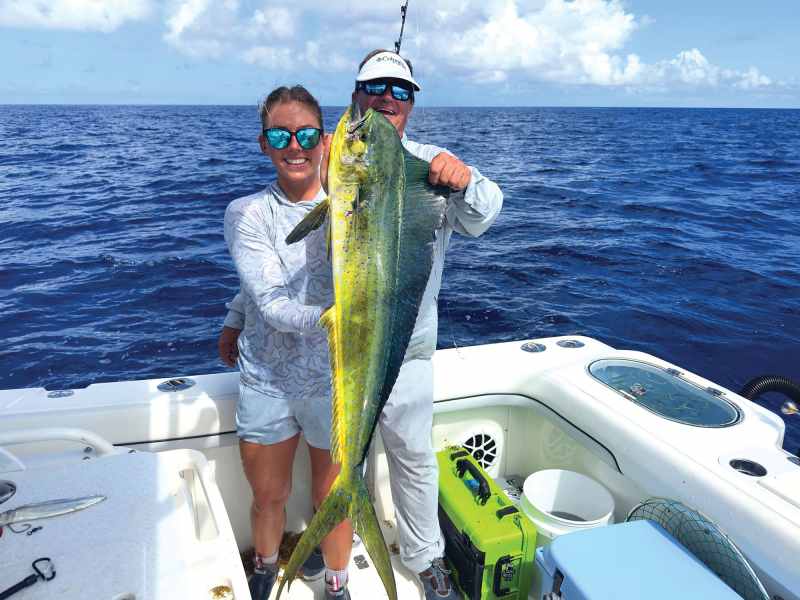 Fall mahi can be fun to catch if you know where to go and what to do.
George Poveromo
Fall mahi can be fun to catch if you know where to go and what to do.
George Poveromo
Southern Florida’s primary Atlantic mahi migration begins in May or April. Good pushes of fish continue beyond this peak, but taper down by July, when most schools have long since traveled to the Mid-Atlantic and Northeast.
Those of us still on the water when the tourist traffic tapers off get a second chance in autumn. South Florida’s second mahi season materializes around mid-September and lasts through October.
Compared to their spring counterparts, fall schoolies are larger and heavier, and there are enough 20- to 30-pounders in the mix to surprise unsuspecting anglers. I love fall mahi fishing, especially throughout the Florida Keys; fewer tourists and boats visit then, leaving more fish for the taking.
New Batches of MahiIt was long believed that fall-run mahi are fish returning from their northern treks. However, according to recent indications, fall mahi comprise yet another migration of fish riding the currents up from the Caribbean. Within that September through October period, there’s typically a solid two-week blitz of fish, with fair to good showings around it.
Last October off Cudjoe Key, Liane Lopez and I were filming one of my “World of Saltwater Fishing” episodes. A Roffs fishing forecast analysis showed a large eddy over 800 to 900 feet due south of the Marquesas, about 60 miles away. I ran MARC VI into 800 feet of water, pointed the bow west and looked for signs of mahi along the way.
The ocean was void of weeds, debris, flying fish and birds, until we reached the eddy. Here, an entirely different sea existed with royal blue water, massive weed lines, flying fish, diving frigates and mahi! Liane and I crushed them, mostly by trolling two flat lines and, with school fish, on spin tackle. We racked the rods at 2 p.m. with plenty of fish to clean back in Cudjoe. This is how October mahi fishing can be.
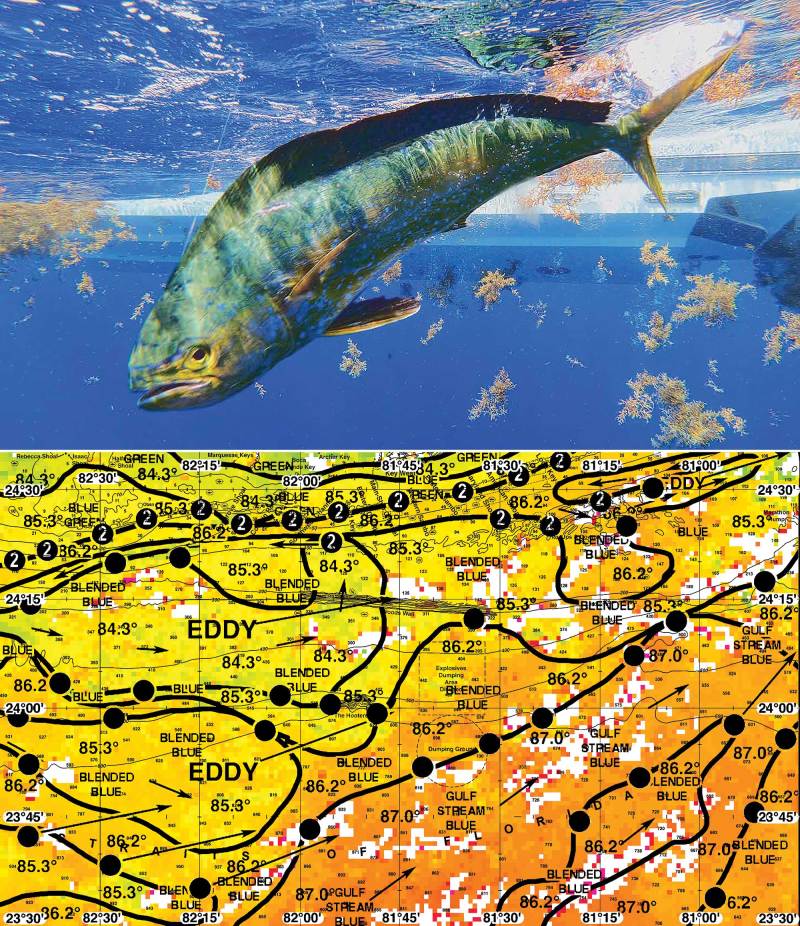 A satellite fishing forecast service can quickly lead you to productive eddies and weed lines.
George Poveromo
Seven Keys to Autumn-Run Mahi
A satellite fishing forecast service can quickly lead you to productive eddies and weed lines.
George Poveromo
Seven Keys to Autumn-Run Mahi
Here is a list of pointers that will help you catch fall-run mahi. I adhere to these practices and they work.
Know the CurrentsA Roffs fishing forecast analysis reveals the true shoreward edges of the Gulf Stream, which meanders in snake-like fashion. I note where the Stream pushes tight against or intersects the continental shelf and other prominent deep structures. Nutrient-rich upwellings occur along these intersects, attracting bait and ultimately mahi.
Read Eddies and FingersLike the eddy Liane and I fished, similar circulation features often peel away from the Gulf Stream and park temporarily over an area. Sometimes elongated “fingers” protrude from the Stream, pushing in the opposite direction before being reabsorbed. Look for areas where an eddy or the edges of a finger interact with aggressive bottom.
Find the FlotsamWeeds and debris accumulate along the edges of the Gulf Stream and its eddies and fingers. Therefore, understanding the currents also helps locate the weeds and debris mahi love. With flotsam, long in the tooth is much better than new, clean and mean. Debris accumulates growth as it remains at sea, and baitfish gather to forage on that growth, which draws in the mahi.
Check Lobster FloatsFrom early August through March, it’s commercial lobster season in the Keys, Florida and the Bahamas, and an abundance of trap floats will decorate the waters. Lobster floats along the reefs are often overlooked by mahi anglers, who usually range far offshore. However, given there’s a Gulf Stream-influenced current tight in, mahi frequent these floats. Give them a solid look on the way out and in.
Read Next: Tactics to Attract and Catch Mahi Offshore
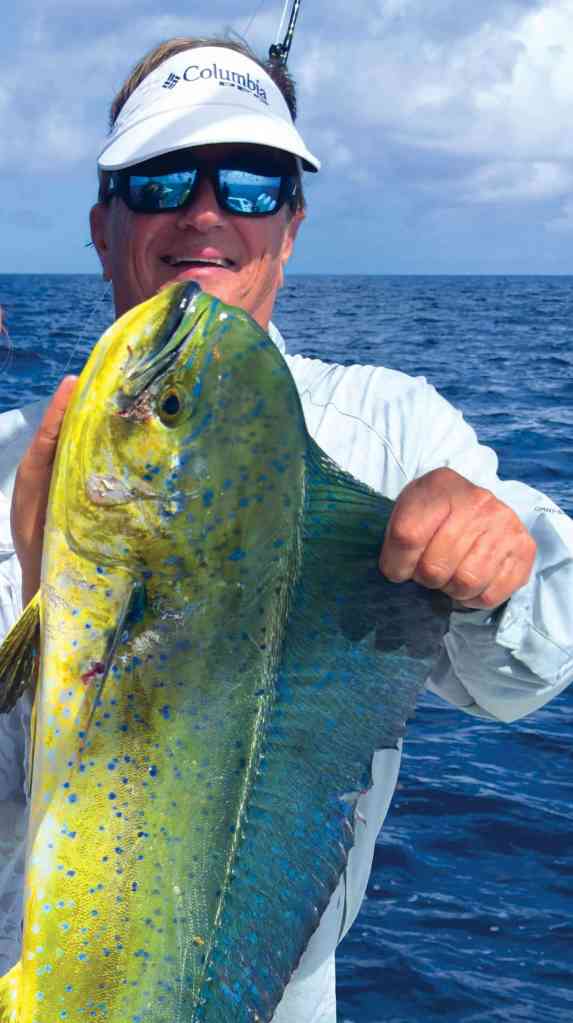 There are a number of clues that indicate mahi are present, if you know how to recognized them.
George Poveromo
Look for Flying Fish
There are a number of clues that indicate mahi are present, if you know how to recognized them.
George Poveromo
Look for Flying Fish
Excellent mahi fishing can occur in an ocean void of weeds and debris. Look for flying fish scurrying over the surface while cruising offshore. When flyers appear, go into trolling mode and devote time to the area. Flyers are a major forage of mahi.
Whether it’s Simrad’s FishCast, SiriusXM’s Fish Mapping, or even the standard Roffs analysis, look for the heaviest plankton and chlorophyl concentrations, which sustain flying fish and other forage species.
Beeline to BirdsSea birds aren’t as prominent during fall. Therefore, radar becomes crucial to locating birds from afar. Quality binoculars are also essential, especially if you don’t have radar. Race to the first sighting of working birds and either drag a pair of ballyhoo around the fringes or pitch out a live bait, plain ballyhoo, squid or chugger. You’ll know within seconds if mahi are around.
Cover WaterMy most productive fall mahi tactic is trolling, which covers a lot of promising water. Match your bait or lure size and color to that of the flying fish to counter any selective feeding. What’s more, fall is a good time for blue marlin.
Wherever mahi abound, marlin will be nearby. Keep handy a 50-pound outfit with a 300-pound fluorocarbon leader and a large circle hook. Should a marlin show on a school of mahi, or you’d like to free-line a bait on speculation, send out a live or fresh mahi.
If you’re lucky, you just might end up with dinner and a show!
The post How to Fish South Florida’s Second Mahi Season appeared first on Salt Water Sportsman.